beehiiv vs Kit for Newsletter Monetization
beehiiv vs Kit compared for newsletter monetization: free tiers, paid scale pricing, Ad Network vs Sponsor Network, and which model each platform fits.
Storefront vs landing page for selling digital products: Unbounce's 6.6% median LP CVR, Monetate-cited 2x vs stores, and when a multi-SKU shop wins.

TL;DR: Storefront vs landing page for selling digital products is a traffic-and-catalog choice. A landing page focuses one offer for campaign or cold traffic. A storefront lets warm visitors browse multiple digital SKUs. Unbounce’s Q4 2024 sample puts median landing-page conversion near 6.6%. Unbounce cites Monetate for landing pages converting and spending about 2x versus a typical ecommerce store. Multi-step carts still abandon near 70% in Baymard’s average.
Creators argue about storefront vs landing page for selling digital products as if one template were morally superior. The real fight is shorter: what job must this URL finish for this visitor?
Send cold paid traffic into a multi-product shop with a sticky nav and three competing CTAs, and you will fund bounce. Send a loyal newsletter into a single PDF sales page when they want your whole catalog, and you will leave money on the table. Digital products make the choice sharper because delivery is instant and a Stripe Payment Link can replace a full cart, but only if you pick the right surface.
Key takeaways:
Storefront vs landing page for selling digital products compares two destination types: a focused single-offer sales page versus a multi-offer shoppable page where visitors can browse more than one digital SKU.
A landing page matches one promise from an ad, email, or post to one next step (buy, trial, or waitlist). Navigation is stripped. The CTA is singular. Unbounce’s definition family is the standard: conversion-focused pages that remove leaks (Unbounce).
A storefront, in the creator sense, is a shoppable page tied to a named seller or creator. It may hold courses, templates, coaching slots, and affiliate picks in one bio click. That is a different job from a link hub that only routes (Linktree vs storefront platforms). Marketplace co-branded pages that sell other merchants’ products are a fourth surface (creator storefront types).
| Dimension | Landing page | Creator storefront | Link hub |
|---|---|---|---|
| Primary job | Convert one offer | Browse and buy multiple offers | Route clicks |
| Best traffic | Cold paid, launch ads, one email offer | Warm bio, returning fans | Mixed, pre-decision |
| Navigation | Minimal / none | Light shop nav | List of destinations |
| Checkout | Often Payment Link or embedded | Cart or multi-product checkout | Usually off-page |
| Failure mode | Wrong offer for browser intent | Choice overload for cold traffic | No sale path |
Wrong destinations tax CAC before creative ever gets a fair test. Cold traffic that needed message match lands on a catalog. Warm fans who wanted three SKUs hit a dead-end sales page and bounce to a competitor’s bio shop.
Why this comparison earns a page:
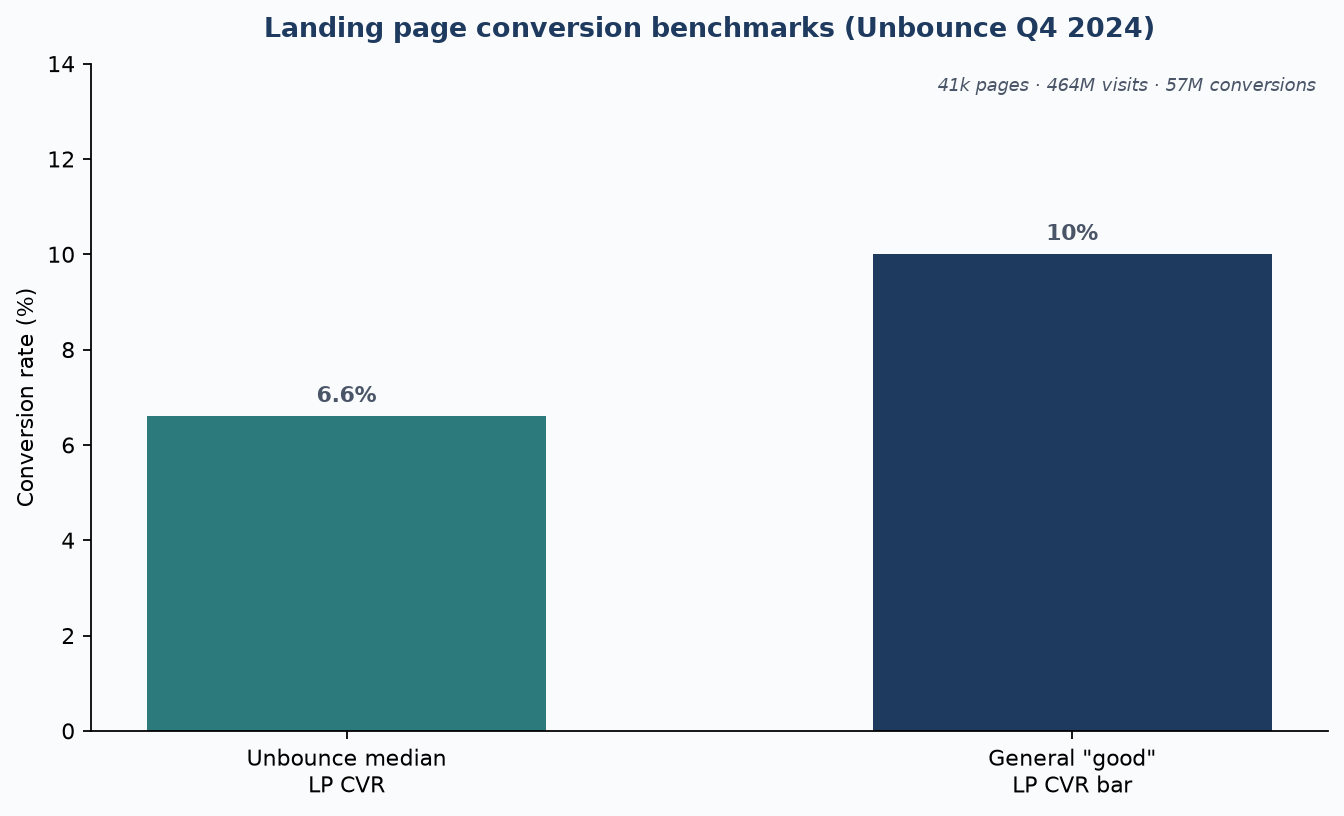
Source: Unbounce Conversion Benchmark Report / average landing page conversion rate (Q4 2024 data; median across industries). https://unbounce.com/average-conversion-rates-landing-pages/
The comparison works when you assign each URL a job: harvest one campaign promise, or host a catalog for people who already trust you. Digital delivery does not erase that fork. It only makes a bad fork cheaper to ship and more expensive to ignore.
Use a landing page when:
Unbounce’s median 6.6% is a cross-industry landing-page baseline, not a digital-product law (Unbounce). A $9 lead magnet and a $2,000 course will not share a “good” rate. Use the median to stop lying to yourself with 0.4% pages you refuse to rewrite.
Use a multi-offer storefront when:
Storefronts lose when every SKU fights for the same cold click. They win when the creator is the brand and the catalog is the product.
Unbounce markets that landing page visitors have been shown to convert and spend twice as much as those sent to a typical ecommerce store, citing Monetate’s Ecommerce Quarterly (Unbounce). Use it as directional pressure toward focused destinations for campaign traffic. Do not paste “2x” into a board deck as if Monetate audited your niche last week. Pair it with your own split test: same ad → LP vs storefront URL.
Baymard Institute’s average documented cart abandonment rate is about 70.22% across 50 studies, with their tracked global average near 70.19% over 13 years (Baymard; Baymard blog). Their research also estimates roughly 35% conversion upside from checkout design fixes on average large ecommerce sites.
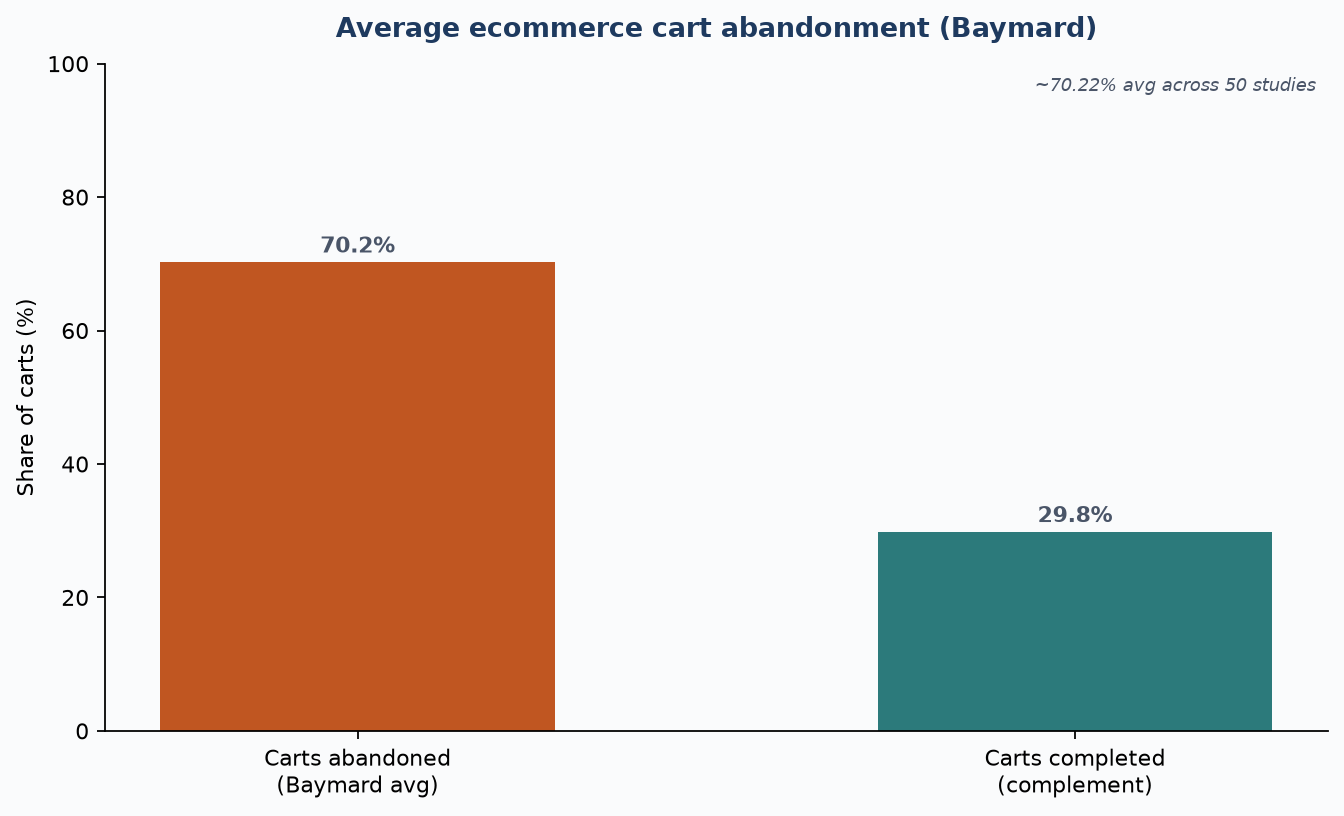
Source: Baymard Institute cart abandonment meta-analysis / checkout usability research. https://baymard.com/lists/cart-abandonment-rate
For digital products, that is the argument for Payment-Link LPs on campaign traffic. It is also a warning: if your “storefront” clones a physical retail cart with surprise fees and forced accounts, you imported Baymard’s problem on purpose.
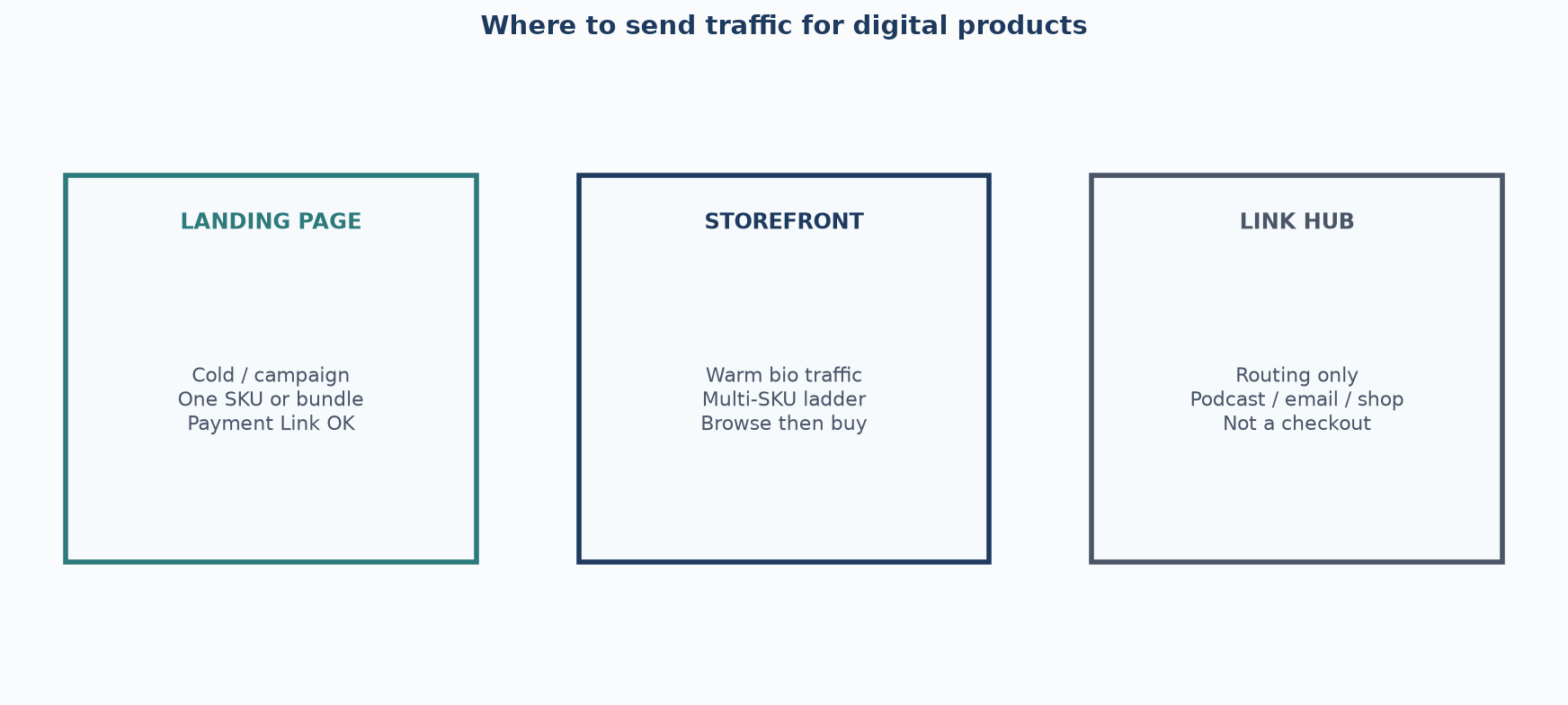
Source: Editorial framework combining Unbounce LP benchmarks, Unbounce/Monetate destination claim, Baymard cart abandonment, and feat. storefront surface map. https://unbounce.com/average-conversion-rates-landing-pages/
| Situation | Prefer | Why |
|---|---|---|
| Meta/TikTok prospecting for one digital SKU | Landing page | Message match; fewer leaks |
| Bio link with 4+ digital offers | Storefront | Browsing job |
| Only need to route podcast, newsletter, shop | Link hub | Routing job (Linktree vs storefront) |
| Retargeting buyers who know you | Storefront or deep PDP | They want options/context |
| Selling other merchants with a split | Marketplace co-branded storefront | Tracking + attribution |
| Pre-launch validation | LP or waitlist LP | Speed (waitlist benchmarks) |
| High-ticket digital with long education | Long-form LP (sales page) | One story, one CTA |
Q: What is the difference between a storefront and a landing page for digital products? A: A landing page focuses one offer and one CTA, usually for campaign or cold traffic. A storefront is a shoppable page where visitors can browse multiple digital products. A link hub only routes; it is not a storefront unless checkout lives on that page.
Q: Do landing pages convert better than storefronts? A: For cold campaign traffic, focused landing pages usually win because they remove navigation leaks. Unbounce cites Monetate for landing page visitors converting and spending about twice as much as those sent to a typical ecommerce store. Warm fans with multiple SKUs often convert better on a storefront. Test your own split.
Q: What is a good landing page conversion rate? A: Unbounce’s Q4 2024 sample of 41,000 landing pages found a median conversion rate near 6.6% across industries. They often describe about 10%+ as generally good, but price, industry, and goal change that bar. Digital downloads and high-ticket cohorts will not share one target.
Q: When should creators use a storefront instead of a sales page? A: Use a storefront when bio or returning traffic needs to browse a ladder of offers (mini, flagship, subscription). Keep a dedicated sales page or landing page for paid ads and single-offer launches. Many creators need both URLs.
Q: Does cart abandonment matter for digital products? A: Yes, if you use a multi-step cart. Baymard’s average cart abandonment sits near 70%. Single-offer digital landing pages can often avoid that path with a Payment Link. If you need a cart for bundles or subscriptions, invest in checkout UX on purpose.
Storefront vs landing page for selling digital products is not a branding preference. Landing pages buy focus for one promise. Storefronts buy browsing for people who already care. Anchor expectations to Unbounce’s 6.6% median LP CVR, treat the Monetate-cited 2x claim as directional, and remember Baymard’s ~70% cart abandonment before you romanticize a mini-Shopify for a single PDF.
If you built a digital product and want affiliates to sell it on co-branded pages instead of fighting your homepage, list it on feat..
beehiiv vs Kit compared for newsletter monetization: free tiers, paid scale pricing, Ad Network vs Sponsor Network, and which model each platform fits.
A creator storefront is a shoppable page tied to a creator. Four surfaces: link hub, sell-own shop, retailer affiliate page, marketplace co-branded page.
Linktree vs storefront platforms: three jobs (link hub, sell-own, sell-others), published fees for Linktree, Beacons, and Stan, plus GMV break-even math.